Yoga Studio Near Me
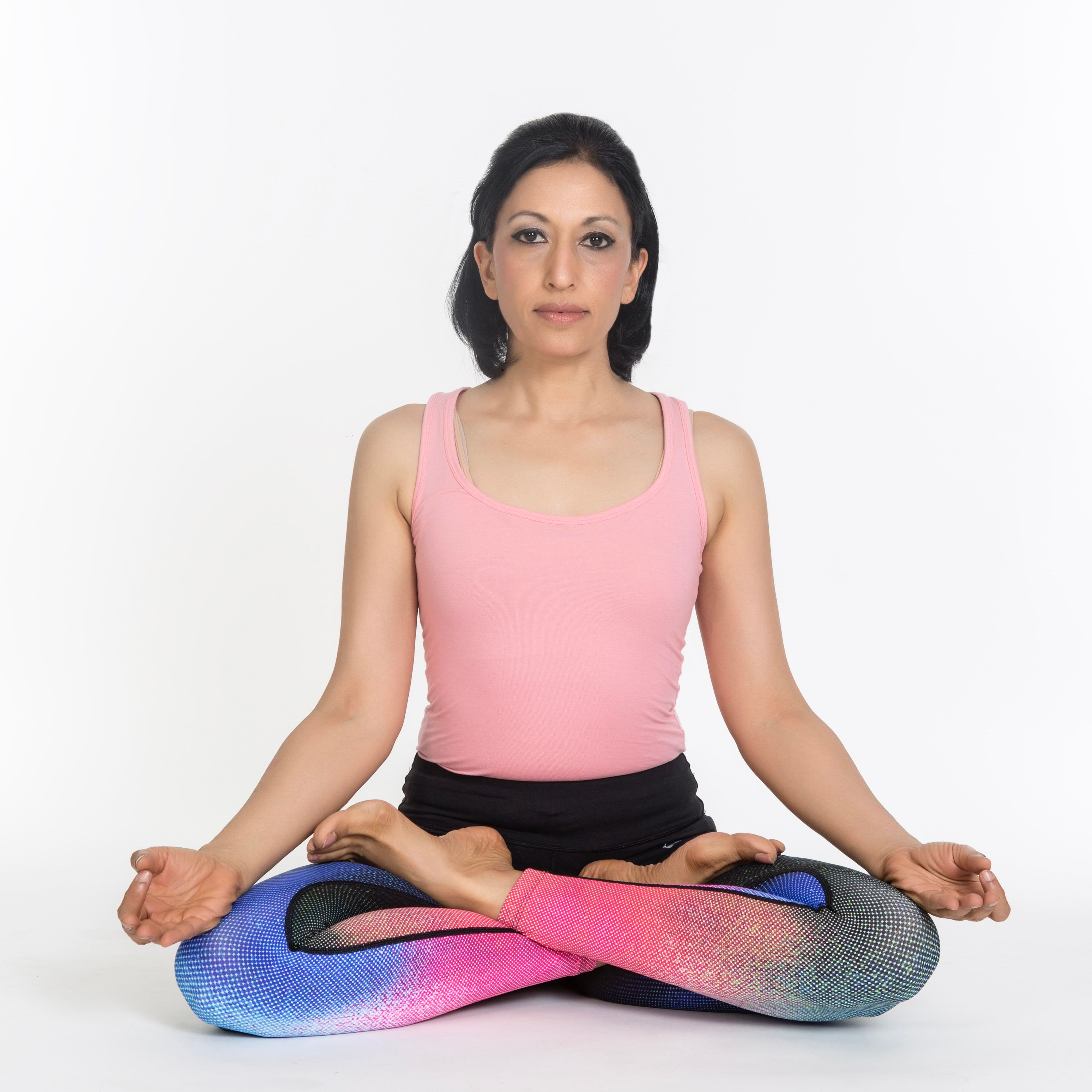
The classic yoga posture, ‘Padmasana’ or the Lotus pose looks serene on every yoga poster yet it quietly instils fear and dread in many beginners right at the outset of their yoga journey.
The ‘Padmasana’ posture holds the lower body locked in a steady base, from which the spine easily lengthens upwards and the mind is able to remain poised for Pranayama or Meditation. However, for those who are debating how to start yoga and attempt such postures with stiff hips or sensitive knees, the answer is this begin with supported seated poses, gentle hip openers and guided breathing and allow one's body to attempt deeper positions with time.
Some have called us the Best Yoga Studio in Gurgaon. Thank you. Let’s unravel this dilemma of Padmasana. We are encouraged to guide students of all ages and ability level to crack the mystery that is the Lotus posture.
Why Sitting Cross-Legged Feels So Challenging
Most people blame knee stiffness for not being able to assume Padmasana, but this addresses merely a small part of the story. The lotus posture demands deep outward rotation of the thigh bone within the hip socket. When that rotation doesn’t happen, the twist shifts to the knee, which is a hinge joint that was never designed for this movement.
The shape and angle of the hip socket and thigh bone also differ from person to person, so two equally dedicated practitioners can have very different ranges of motion.
When one puts into consideration years of stiffness, built up by sitting for endless hours on chairs, sofas and office desks, then achieving this target pose becomes an even more daunting prospect.
To those who feel that postures such as these stress the joints, here's a reassuring fact A 2012 study covering 476 patients who underwent knee arthroscopy found that habitual lotus sitting and squatting didn’t raise the risk of a meniscal tear, while age, sex, body weight and knee alignment did.
Body structure also clearly matters, so struggling with Padmasana is no personal fail. No one should force the pose.
Why Padmasana Is Worth Working Towards
The lotus seat is a stable, symmetrical base, where both the knees stay low, the spine rises naturally, and the legs lock into a steady triangle that resists swaying. The stillness weachieve in this posture, helps the breath to settle. Thus ‘Padmasana’ which enables smooth breathing, is an ideal posture for pranayama and ideal for meditation as well, as the body is locked in position with a strong base which holds the spine erect. An upright spine is fundamental for meditation where ‘pranic’ energy ascends from lower energy centers to higher ones along the spine. In other seated postures like simple cross legs, after a while the back slumps and the spine sags but in Lotus posture the lower body positioning keeps the spine lifted and upright.
Besides, very few poses allow the body to be both fully relaxed and completely upright and that strong combination is what makes the lotus a lifelong goal for yoga practitioners.
Working Upto Achieving ‘Padmasana’
Start with a set of preparatory hip opening stretches. Attempt and practice these 8 postures regularly.
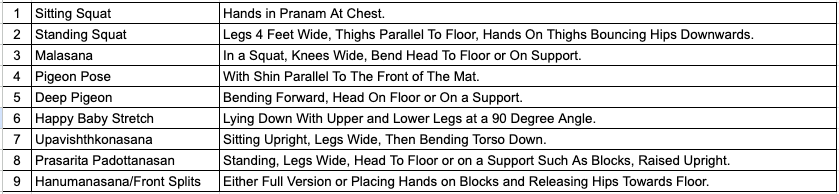
Along with a regular practice of the above hip opening stretches, one should keep attempting getting the legs into a half lotus posture.
Start by placing a folded blanket or a firm cushion under the hips to tilt the pelvis forward and ease the knees towards the floor. From there, simpler seats, such as Sukhasana and Ardha Padmasana (half lotus), can make the hips acquainted to gradual rotation.
In Lotus posture the heels get fixed on the opposite thigh, high up into the groin area. While getting the foot up we should try and keep the bent lower and upper leg close together. This means that there should not be a yawning gap between the calf and thigh as we pull the heel up.
To clarify things further, here's a quick guide on the subject matter Butterfly or ‘Titli’ is a preparatory posture for the Lotus. We sit with the souls of our feet touching, in front of our perineum. Then we open out the inner edges of our feet so that the soles of the feet point upwards and we try and relax the bent knees towards the floor. We can spend two minutes here, flapping our bent legs to loosen up the tight inner hips and groin area.
While sitting in the Butterfly or the Lotus posture, if the below mentioned common hurdles occur, then understand the likely cause and the stepping stone to ease the discomfort.
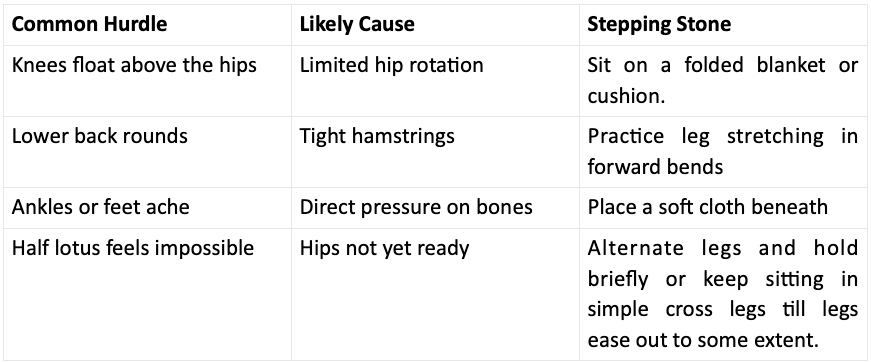
The golden rule here is that one needs to stretch around the hip, so work on opening the outer hips, inner hips, as well as our glutes and hamstrings. If there's ever a sharp or pinching sensation in the knee, it's a sign to ease off and attempt a gentler version of the posture.
Additional Practices to prepare the body for Padmasana
Besides the preparatory postures mentioned, yoga breathing exercises or pranayama and chanting help to energise the system and clear energy blockages. Standing poses build stability and balance, while Yoga Nidra teaches the body to release tension from the
muscular and emotional levels. Feel free to check out our blog on Yoga Nidra Versus Meditation, which explains how deep relaxation softens the very muscles that resist the lotus. Ten minutes of daily hip mobility will serve us better than one painful weekend attempt. Regularly practice the eight key postures mentioned.
Conclusion
Learn yoga from those who are experienced. Are you using the search words Yoga Studio Near Me? YogawithSapna offers both live and online classes. The live sessions are held in Gurgaon at the studio near DLF Galleria. Every class is led with attention to detail.
Book a trial class at YogawithSapna and start moving towards a lotus that is achieved with diligent practice while being mindful of correct alignment.