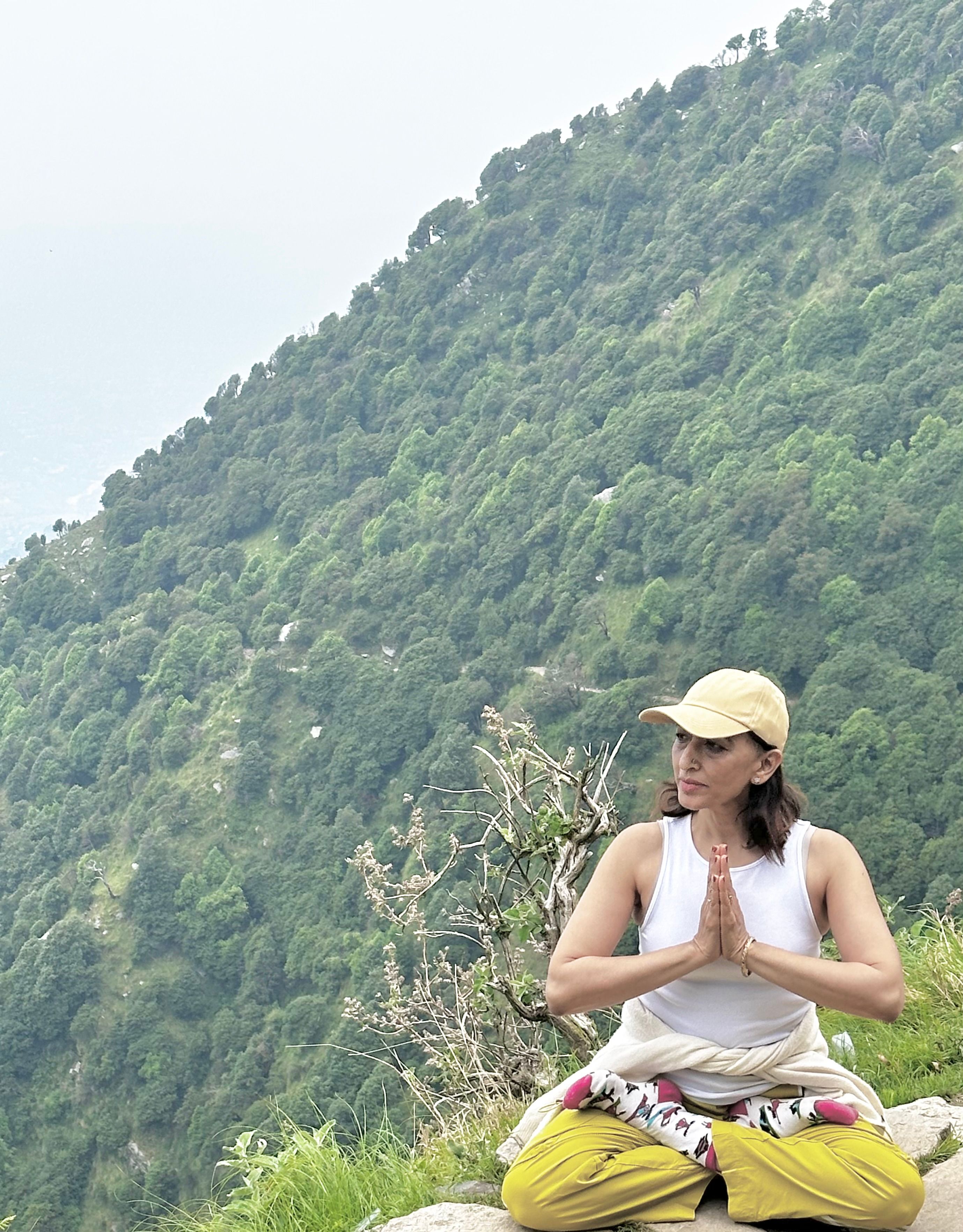
Yoga Nidra v/s Meditation
Lie down, close your eyes and try not to fall asleep.
That single instruction sums up the confusion that most people feel when they initially practice Yoga Nidra.
As for Meditation, the wandering mind is the hurdle we keep trying to overcome.
If one is wondering whether both of them are the same thing the answer is NO.
Yoga Nidra is a guided, lying-down practice that takes one through layers of relaxation, whereas meditation is a seated, focused practice that trains our attention itself.
It's crucial to understand the difference between the two practices to get the most out of them.
Yoga Nidra and Meditation - What’s The Difference
The Practice Of Yoga Nidra
Also known as yogic sleep, Yoga Nidra is a structured practice that's done by lying flat on our back while a teacher's voice guides us through body awareness, breath observation and visualisation. The teacher gently guides the practitioner's nervous system from a stimulated alert state to a place of deep rest (all while a thread of awareness stays switched on).
This means that the practitioner should not fall asleep. With practice one learns to be deeply rested while still awake it’s like hovering between a state of sleep and wakefulness. In this state our intellectual, thinking mind switches off but the deeper subconscious mind remains awake, in fact it becomes even more alert.
The Fundamentals of Yoga Nidra entail that during the practice, one is not asleep, but also far from the usual waking stage, so a good analogy would be parking our car in neutral while the engine still hums.
What Is Meditation?
On the other hand, Meditation asks one to sit upright and direct one's attention on a single thought or image such as on one’s ‘Prana’ (breath), a mantra, or simply the present moment.
It is an active mental discipline, where we notice thoughts arriving, allow them to pass and keep returning our focus again and again on the chosen single image or thought.
In case one is wondering how this can help or “why should I meditate at all”, let me emphasize over time, Meditation can help to build concentration, self-awareness and emotional steadiness. Then as one stays regular with one’s practice, over time we are able to deepen our spiritual practice as well.
Many great Indian yogi’s and sages have defined meditation and expressed their opinions on Meditation thus.
Patanjali, (around 2nd century BCE, approximately 150 BCE) also known as the father of modern yoga, defined meditation in the Yoga Sutras as “an unbroken, steady stream of thought or awareness, directed towards a chosen object or the divine”.
Maharishi Mahesh Yogi (1918 to 2008) Transcendental Meditation) defined meditation as a simple, natural process allowing the active conscious mind to settle inward until it experiences the deepest source of thought - pure awareness or Being.
Sadguru (1957 to current Isha Foundation) describes meditation not as something you do, but as a quality or state of being. Just as sleep is a state of the body, meditation is a state of consciousness separate from the body and mind.
Swami Vivekananda (1863 to 1902) emphasized meditation as the primary instrument through which the mind is introspected, controlled and redirected from external illusions back to the true inner self (Atman).
Ramana Mahararshi (1879 to 1950) - a master of Self-Inquiry (Atma-vichara) taught practitioners to continuously ask “Who am I?” To trace thoughts back to their source, dissolving the ego directly into the Self.
Sri Aurobindo (1872 to 1950) developed Integral Yoga, which uses meditation not just for personal peace but to descent higher spiritual consciousness into the physical mind and body to transform human nature itself.
Parmahansa Yogananda (1893 to 1952) defined meditation as dying to the world without dying, meaning, the conscious withdrawal of life energy and attention from the outer senses to experience inner divine peace.
So, Which One Should We Choose
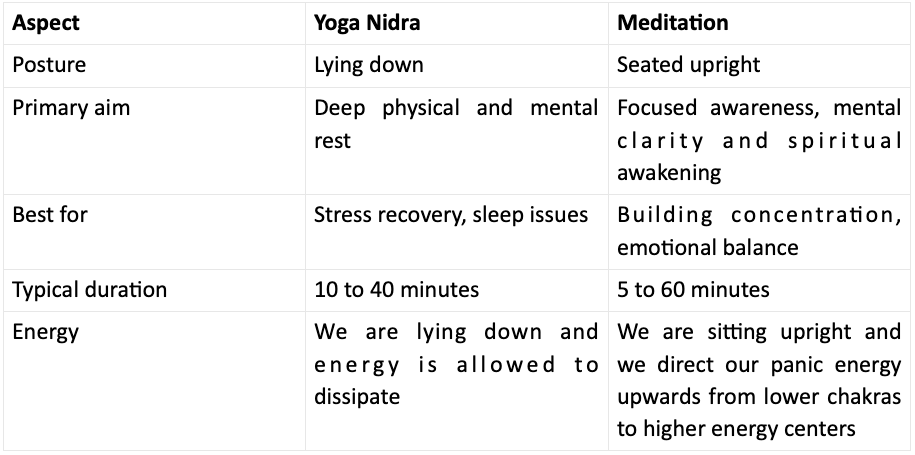
Neither is better than the other they simply do different jobs. We must practice both. To help us establish a clear distinction between the two, here's a comparison table -
What Should Beginners Know Before Practising
Starting either practice does not require advanced yoga skills or long sessions. A few simple considerations like the following can make the experience deeper-
Find a Quiet Space :- Reduce noise and distractions before beginning.
Avoid Forcing relaxation :- Let our body and mind settle naturally.
Stay Comfortable :- Wear loose clothing and choose a supportive surface.
Keep Expectations Realistic :- Our mind may wander, especially during meditation.
Use Guided Sessions :- Beginners may find voice-led Yoga Nidra easier to follow.
Build Consistency :- Regular short sessions can be more practical than occasional long ones.
Most importantly, treat both practices as skills rather than quick fixes because our experience might also vary depending on our energy, stress levels, and familiarity with the practice.
Conclusion
We do not have to pick a side. Go for a short, seated meditation routine in the morning to sharpen our focus for the day ahead, then Yoga Nidra in the evening to unwind and sleep better.
If we are curious about how these practices are woven together, this piece on Why Nature Instantly Calms Our Mind is a lovely place to start.
By steadily incorporating both in our regular life, we begin to feel the effect that these two soulful practices bring to our overall wellbeing.
So finally to the question - Yoga Nidra Technique or Meditation? The reply is - choose both.
Do opt for a yoga class at Yoga with Sapna and learn how both practices can be blended into sessions designed around real, everyday stress.