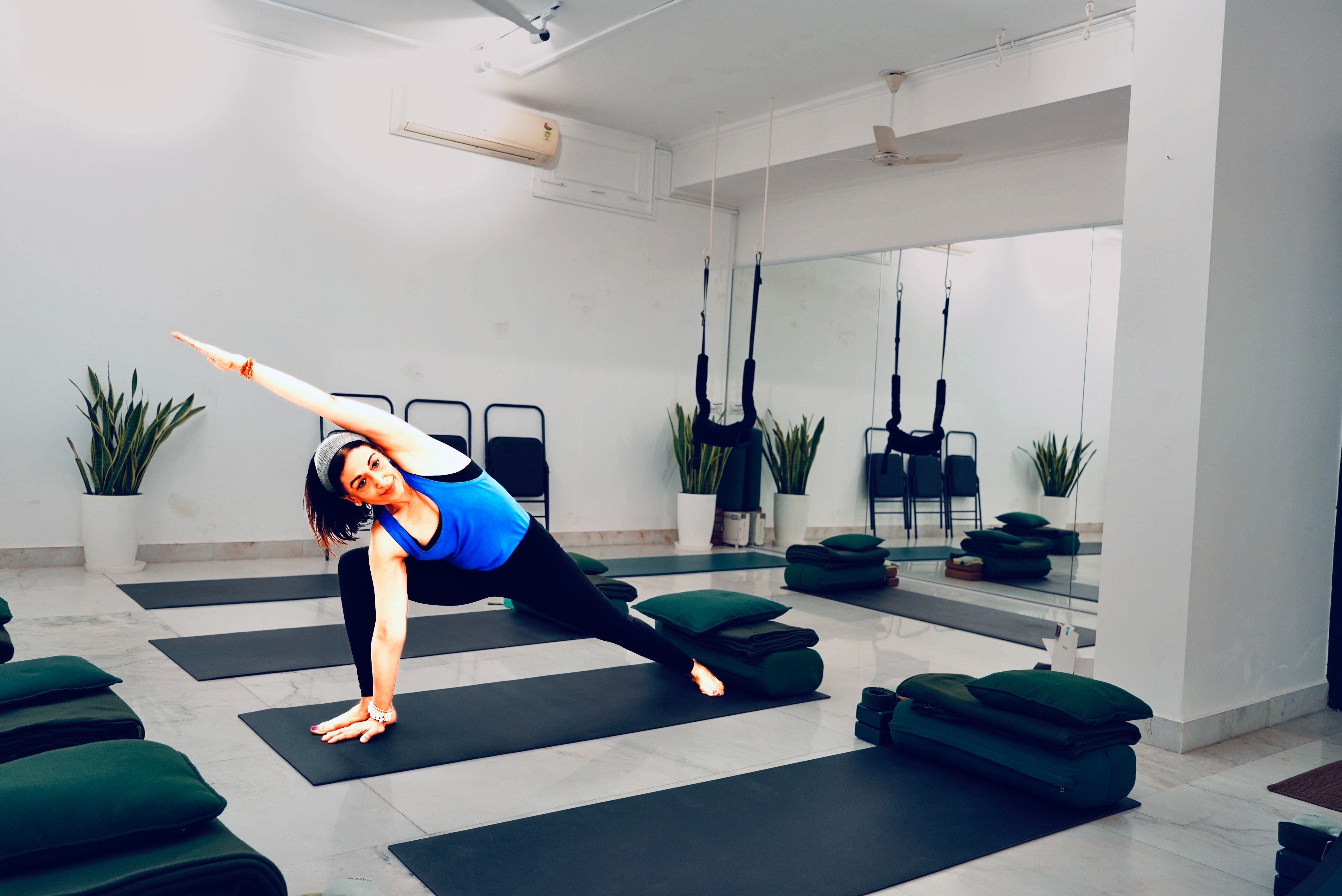
Ashtanga Yoga Classes
Ashtanga Yoga refers to two different concepts. The earlier and original meaning is the ‘eight-fold path’ or 8 steps to follow on one’s yogic spiritual journey, put forth by Sage Patanjali in his ‘Yoga Sutras’ dated somewhere between the 2nd century BCE to around 400-500 CE.
The second meaning refers to a dynamic and physically challenging style of yoga, also known as ‘Ashtanga Vinyasa Yoga’ begun in 1948 by K. Pattabi Jois in Mysore, India and popularised in the 20th century.
Are you one of those people who have been fascinated by yoga and its benefits but never started practising? Do the thoughts of not being flexible enough always stop you from being a yoga practitioner?
If you answered yes, it's time to stop hiding behind these fears. Yoga forms like Ashtanga Yoga are in fact designed to build one's flexibility, strength, balance and body awareness over a period of regular practice.
Even if someone finds simple bending and sitting on the floor to be a challenging task, they can begin to attempt Ashtanga Yoga with modifications, thereby still extracting many benefits while slowly starting their flexibility journey.
Here's how one can get started.
1. Understand What Ashtanga Yoga Involves
Ashtanga Yoga involves an orderly series of postures (asanas) with synchronised breathing and movement. It emphasises ‘drishti’ (focusing the gaze), ‘bandhas’ (energy locks) and ujjayi pranayama (breathing technique). The Ashtanga system has six series; each building on the strength, flexibility and focus developed in the previous series. The Primary Series, also known as Yoga Chikitsa, involves forward bends, twists, standing, and sitting postures. Although some movements can be difficult, one does not have to learn the entire sequence at once. Instead, focus on learning the basic movements and not on imitating more advanced practitioners.
2. Start With Beginner-Friendly Modifications
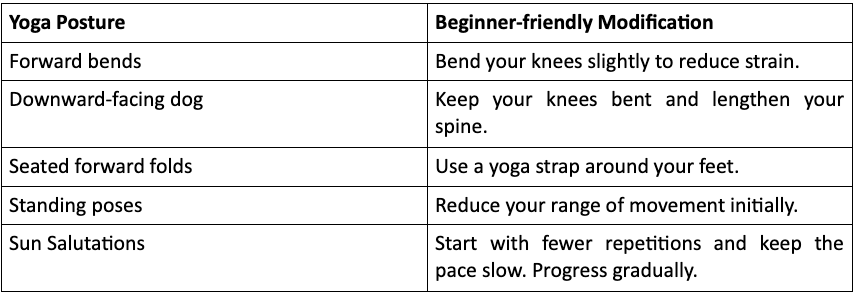
A lack of flexibility should never hold one back from attempting a range of postures. Rather than straining oneself to forcefully try and get into a pose, utilise variations that will allow one to hold proper form. Remember, modifications are not shortcuts. They help one develop the strength and mobility required for finally assuming the full posture.
Some variations for common poses in Ashtanga Yoga are mentioned in the table below -
3. Build a Consistent Beginner Routine
We don't need to do one hour of daily practice in the beginning. An easy and short practice schedule can help one get acquainted with the movements. Start with a 20 to 30 minutes practice four to five times a week. This includes some warming-up exercises, a modified Sun Salutation, basic standing poses, and some relaxation. Be attentive to the body's reaction during this practice. We will feel the effect of the stretches in our muscles; however, any sharp pain, joint soreness, or too much strain is a sign to ease up on that pose.Consistency is key here, not intensity.
4. Learn From a Qualified Ashtanga Yoga Instructor
It is crucial to learn the right technique when we lack flexibility. An experienced Ashtanga Yoga Instructor can guide us through postural alignment, breathing, transitions and proper adjustments. They can also identify movements where we should avoid forcing, and help us progress at a comfortable pace. One can attend Ashtanga Yoga Classes that cater to beginners, where the instructor offers personalised guidance and modifications. If attending a class in person is difficult, there are online classes, to make it more convenient. It's important not to compare one’s progress to the more experienced yogis, as everyone has been putting in a different amount of time into their practice, besides innately possessing different physical abilities.
5. Consider Structured Ashtanga Yoga Courses
If one appreciates a systematic, approach to learning, then Beginner Ashtanga Yoga Courses can prove to be a good choice to develop one’s yoga practice.
The ideal course should include:
- Yoga poses and their modifications.
- Breathing methods and coordination of breath and movements.
- Basic anatomy and proper alignment.
- Slow and steady progression through the Primary Series.
- Adequate rest and practice.
It's paramount to find a course where technique takes precedence over hasty effort towards complex poses.
6. Be Patient With Your Progress
One should not compare oneself to other people with regard to flexibility. Flexibility will develop over time through regular stretching and a balanced yoga practice. In fact, as we practice we will begin to notice changes in how much easier than before, we are able to bend, sit, or move in our day-to-day activities this will then progress into attempting deeper bends.
Conclusion
So in conclusion, I can confirm that - Absolutely, it is possible to start practising Ashtanga yoga with zero flexibility. We neither need a naturally agile body nor any specific equipment or expertise to slowly develop into a seasoned ashtanga practitioner. Everyone’s body has the ability to evolve and adapt once they start practicing yoga asanas regularly.
To give one’s spiritual and fitness journey a serious kickstart, visit ‘Yoga with Sapna’ right away. My (Sapna’s) teaching’s draw on Hatha Yoga, Ashtanga Yoga, Iyengar Yoga, Sivananda Yoga and then my own experience of over two and a half decades.
Let’s indulge in this meaningful way of life.