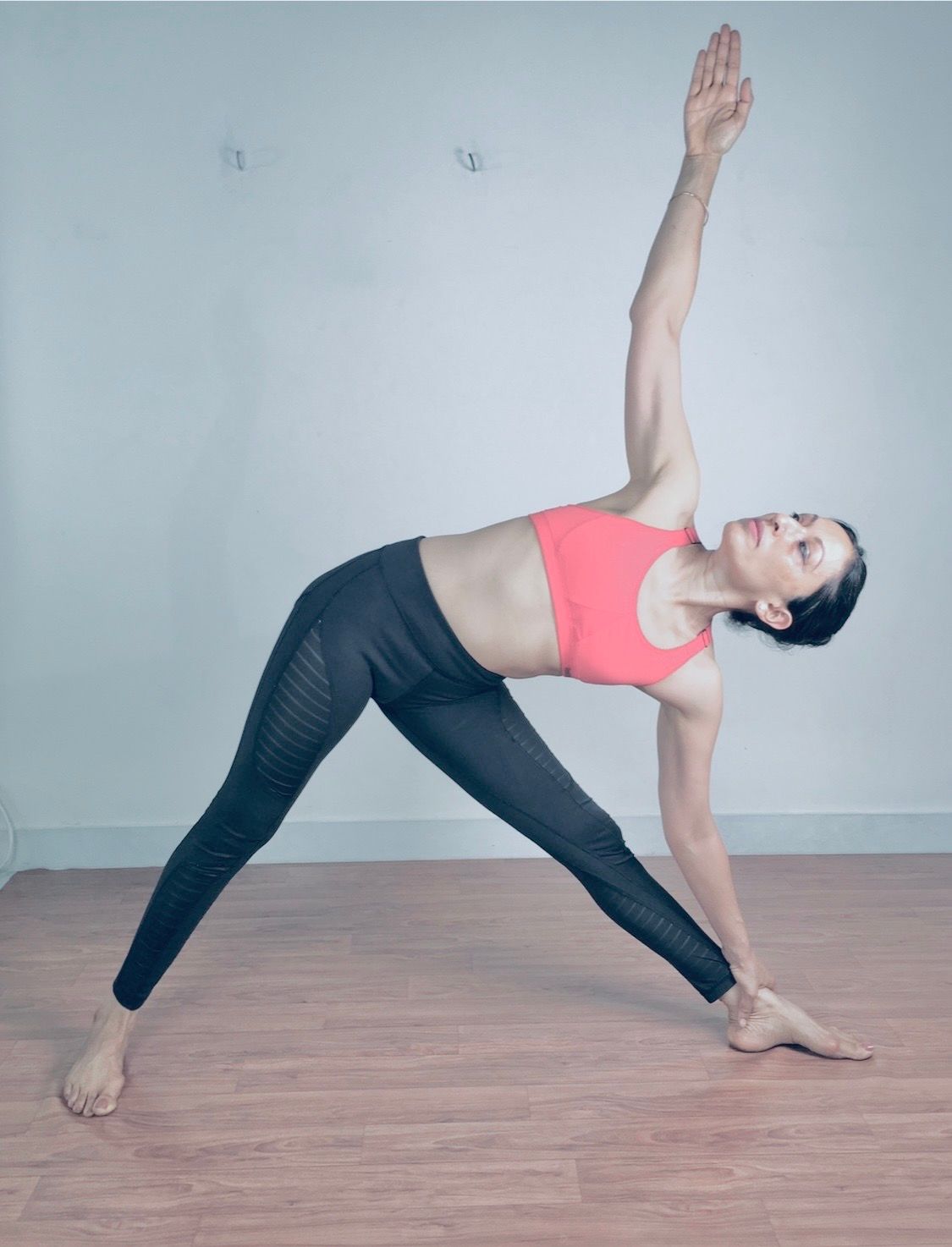
Yoga Centre in Gurgaon
Stress “shows up” physically before it’s even acknowledged.
Have we been sharp enough to notice this?
Be it the clenched jaw, tight shoulders after a long workday, a stiff neck during deadlines, or a slouched back after hours of emotional exhaustion the human body reveals what the mind is trying to manage quietly.
Modern lifestyles in Gurgaon have normalised poor posture.
From long hours at the desk to endless screen time, constant mental chatter and stimulation our energy is completely dissipated and what follows is, stress.
Stress affects every element of our anatomy, including our posture. The truth is, our body gives us indications when it’s not at ease, and among those, posture is the loudest of all the signals.
By joining a professional Yoga Centre in Gurgaon we can help re-establish balance and connection between mind and body. Read on to find out, more.
Stress and Posture: A Hidden Connection
When stress levels rise, the human body kicks into “fight or flight” mode. Muscles tighten, breathing becomes shallow and the spine gradually loses its natural, correct alignment. What’s alarming is that, over time, these patterns become habitual. Some common stress-related posture signs to look out for, include:
- Rounded shoulders
- Forward head posture
- Tight hips and lower back
- Clenched jaw
- Hunched sitting position
- Constriction in the chest
- Tension in the legs
- Short, restricted breathing
- Tension in facial expression.
Poor posture doesn’t just create body pain, it also reduces breathing efficiency, affects digestion, increases fatigue, and even influences confidence levels.
Here’s a table on what the body might be communicating:
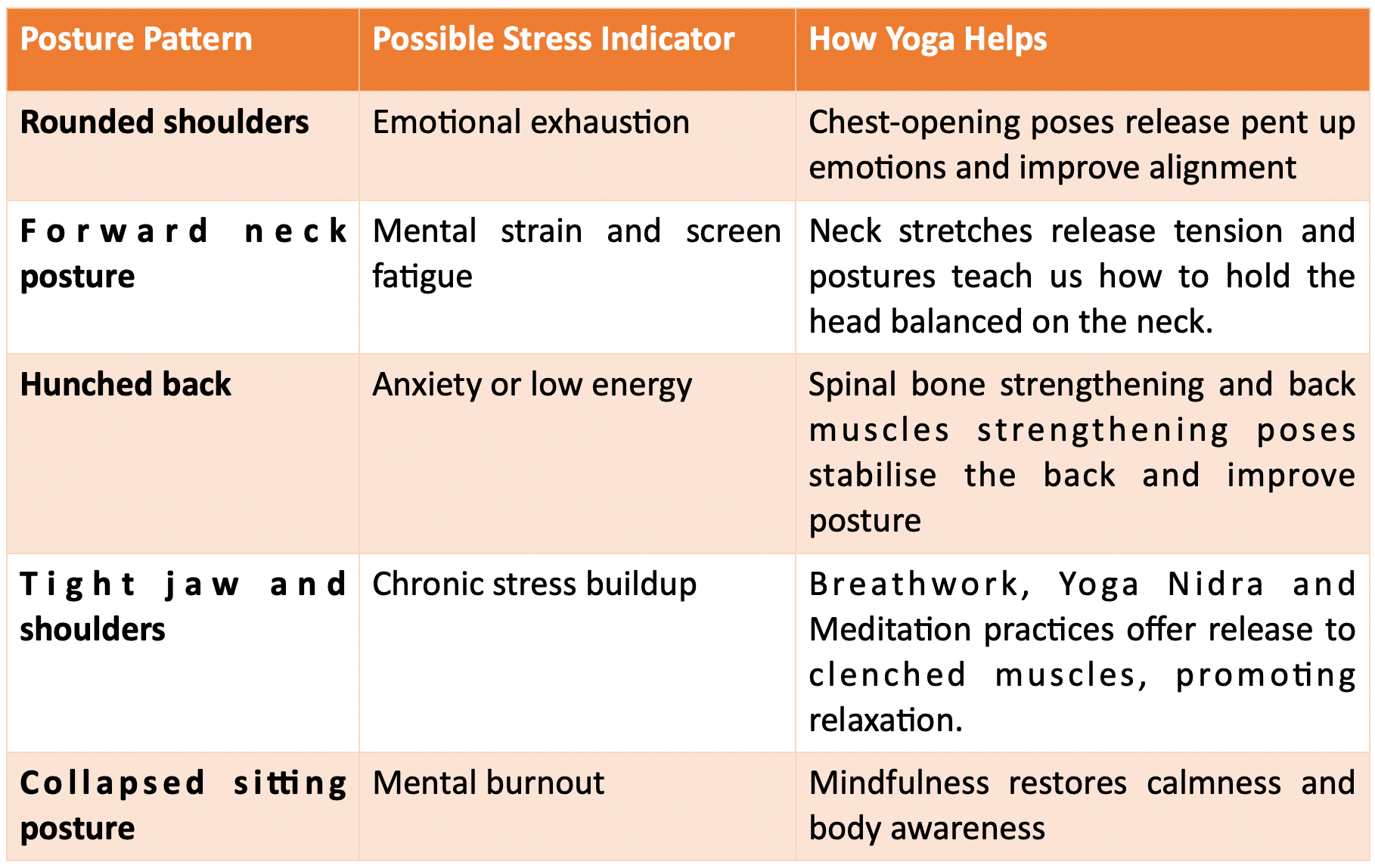
Yoga helps identify these patterns and awareness itself becomes the first step towards healing.
Breaking the Loop of ‘Posture-Stress Dilemma’ with Yoga
Correcting stress-induced, mis-aligned postures, isn’t just about sitting or standing up straight it requires signalling to the nervous system that the danger has passed. This is where yoga can act as the bridge between the physical stress induced posture and a state of neurological safety. Different yoga asanas stretch tight muscles and use the somatic-visceral loop, where we work t manually changing the body’s shape, which begins to alter the brain’s chemistry.
Asanas as Antidotes
Specific yoga postures target the exact areas where stress manifests as physical weight, or physical constriction. These include:
Heart Openers (e.g., Bhujangasana/Cobra Pose, Ushtrasana/Camel Pose): These counteract the "sunken chest" position, by lengthening the pectorals and strengthening the upper back, making it physically harder for the body to maintain a depressed or protective stance.
Hip Openers (e.g., Kapotasana/Pigeon Pose, Sitting Squat/Malasana): The hips often store the "flight" instinct. Stretching the psoas muscle, which tightens when we feel threatened, helps release deep-seated emotional tension.
Inversions (e.g., Sarvanghasana/Shoulderstand and Adho Mukha Svanasana/Downward Dog): By placing the head below the heart, these poses improve blood circulation to the brain and help reset the "Turtle Neck" misalignment by decompressing the cervical spine.
Yoga focuses on Pranayama or breath control and the ‘Surya Namaskar’ vinyasa sequence, which act as mechanical tools for correcting posture. Full yogic breaths, synchronised with Surya Namaskar postures expand the ribcage, thereby training the ribcage to act as an internal brace that supports the spine effortlessly.
Conclusion
Roughly 80% of humankind, at one or another point in their lives, experience some form of back pain related to stress and sedentary lifestyle. Addressing the alignment of the physical body is the first step in helping to re-align the mind, back to a state of balance and calmness. To achieve this, the vast range of our yoga asanas, all prove to be a life-saver.
Take the first step to release the tension stored in your body, restore your posture, and find balance. Join Yoga with Sapna today for structured Yoga Classes in Gurgaon, and sign up for a session to start breathing easier.