Hatha Yoga Classes vs Ashtanga Yoga Classes
Yoga is far more than a fleeting fitness trend it's a centuries-old discipline that was designed to strengthen the body, sharpen the mind, awaken our spiritual self and thereby address overall well-being. However, every yoga style doesn't deliver the same experience and among the most widely practiced forms are Ashtanga Yoga and Hatha Yoga, which stand out for their distinct philosophies and methods.
While both forms have at their core, traditional yogic principles the difference between them lies in pace, structure, intensity and purpose. Understanding these differences helps one choose a practice that can align with individual fitness levels, wellness goals and lifestyle to transform yoga from an ‘off and on practice’ into a sustainable lifelong discipline.
Let’s examine how these two forms of yoga are distinct from each other.
The Foundation of Both Practices
Also known as the umbrella under which many modern yoga styles evolved, Hatha yoga refers to the practices of physical postures (asanas), breathing techniques (pranayama) and relaxation that strengthen the body and mind and further, prepare it for meditation.
On the other hand, Ashtanga Yoga follows a structured sequence of postures introduced by Sri K. Pattabhi Jois, based on ancient yogic teachings, where every session follows the same order of poses. The postures are connected through synchronized breathing and flowing movements. The disciplined format of this form of yoga creates a physically demanding yet deeply introspective practice. This fast athletic style distinguishes it from Hatha Yoga.
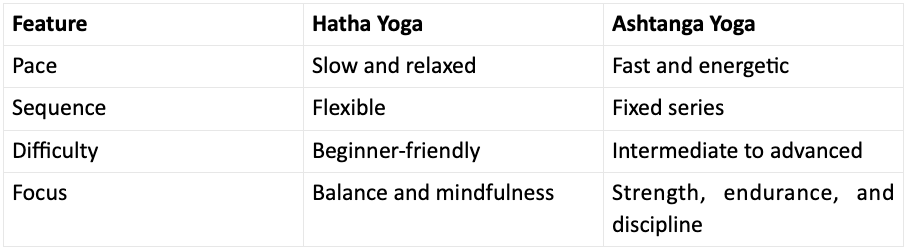
Here are the differences between Hatha Yoga and Ashtanga Yoga at a glance -
Pace and Intensity
One of the biggest differences between these two practices is their speed of practice.
While Hatha Yoga Classes encourage slower transitions between poses, which allows practitioners to hold each posture longer, Ashtanga Yoga moves continuously through a predetermined sequence. The Hatha Yoga approach focuses on body awareness, proper alignment and controlled breathing, and the slower rhythm also makes it easier to understand the mechanics of each pose.
However, in Ashtanga Yoga, every breath guides a movement, creates a dynamic flow that challenges stamina, coordination and concentration and the result is a vigorous workout that builds strength while still maintaining a meditative rhythm.
Flexibility v/s Structure
Hatha yoga sessions may include standing poses, seated stretches, balancing postures, breathing exercises and guided relaxation this flexibility allows teachers to design classes for different skill levels and physical abilities.
However, Ashtanga Yoga follows six traditional series, starting with the Primary Series. Further advancement is dependant on mastering earlier postures, which makes consistency and patience crucial.
Benefits of Each Style
Hatha Yoga works incredibly for those who want to improve flexibility, posture and reduce stress while enhancing balance and mindful breathing. Because of its moderate intensity, this style of yoga is often recommended for beginners, older adults or anyone who is returning to physical exercise after a break.
Ashtanga Yoga offers cardiovascular conditioning alongside flexibility and mobility. So those who regularly practice this form can enhance muscular endurance, build core stability and inculcate discipline due to better mental resilience. In fact, the National Center for Complementary and Integrative Health (NCCIH) is funding research on yoga's potential benefits for chronic pain, hypertension, and emotional well-being, which highlights its growing role in evidence-based healthcare.
Conclusion
The Bhagvad Gita says, “Yoga is the journey of the self, through the self, to the self.” (Source) Irrespective of the path one chooses to practice yoga, a teacher is required to guide us through, ensuring we stay away from making harmful errors also making every session more meaningful. Are you googling Hatha Yoga Classes Near Me to build experience and reap the lasting physical and mental benefits of yoga? Well, if you are in Gurgaon, do schedule some yoga sessions at YogaWithSapna today!