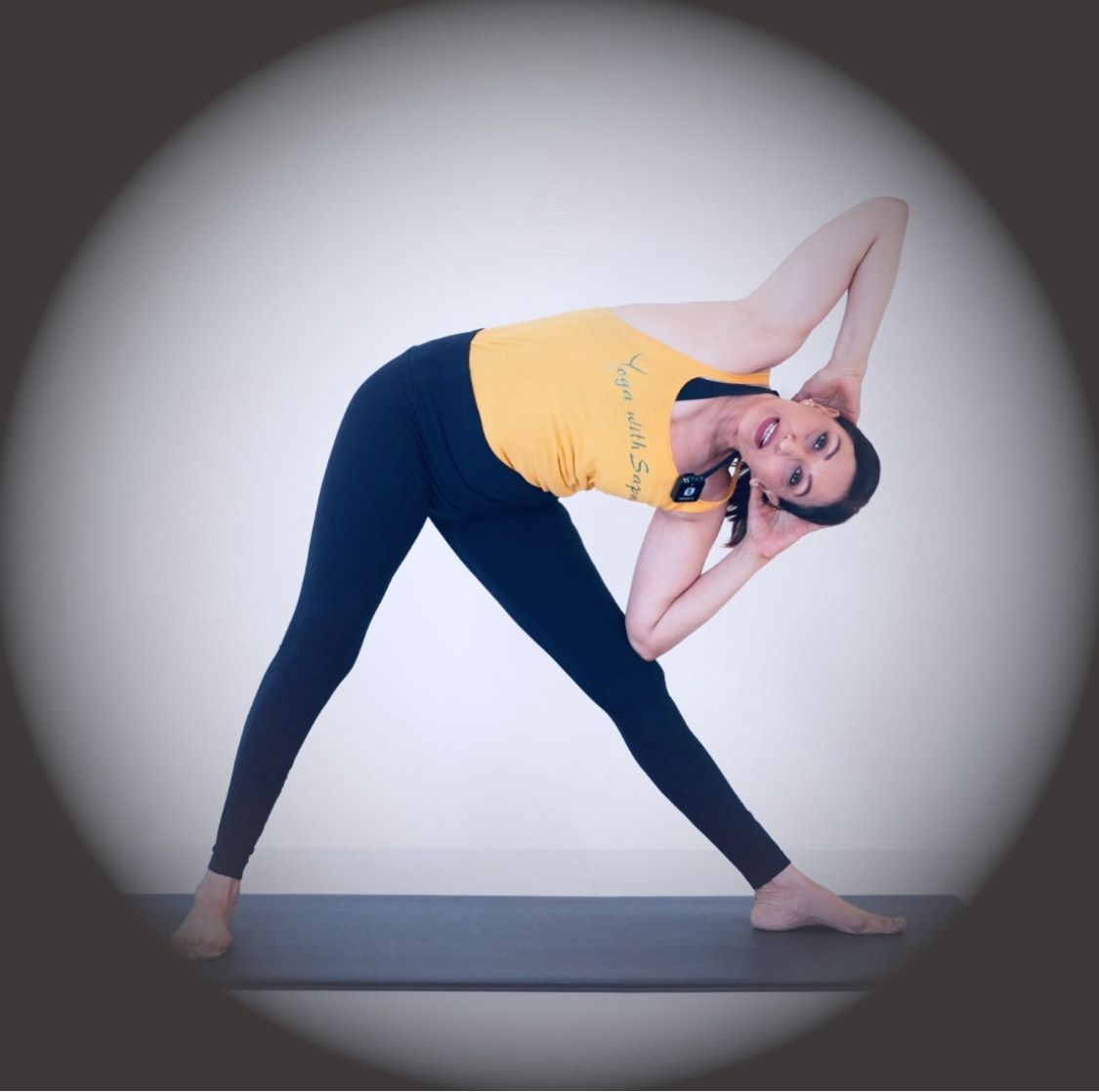
Best Yoga Classes in Gurgaon
In Gurgaon winters, the pollution is held down by the cold unlike hot summers when the pollutants rise up high and dissipate into the atmosphere. Winters bring smog drifting in from nearby highways, dust dancing around the construction sites and chilly winter air, the harbinger of colds and coughs.
In December 2025, the city recorded one of its worst months for air quality in years, with the average Air Quality Index often sliding into the “POOR” and “VERY POOR” categories throughout the month.
Come winter, people in Gurgaon, Delhi NCR, and even densely populated urban hubs like Sonipat, Lucknow and Ghaziabad get that distinct feeling like their lungs are not taking in fresh oxygen, rather, their lungs are filtering grit.
The pollution scenario is as though we were continuously smoking. This is frightening, to say the least and we need to think of solutions to save our precious lungs. As a Yoga Teacher I need to give you sound, honest advice. In my opinion, the first choice would be to leave these areas for these three months of November, December and January. Head off to southern India to beach areas, forests and places where the weather is warm and the skies are blue.
I understand that children have school and people have work commitments it’s not possible for everyone to just leave their homes for such a long spell. So for all these people I would like to suggest a battle plan of action.
Pollution is our enemy. How do we defeat it? We need to use our brains and be like disciplined soldiers in following a tight plan.
Step one is to stay indoors as much as possible. Make our house into a clean biosphere. Seal all doors and windows so that outside pollutants cannot leak in at all. Every room of the house should have an air purifying unit. Since fresh oxygen cannot enter our airtight house, we counter that by filling our house with purifying plants which give out oxygen day and night.
Plants use the process of photosynthesis whereby they utilize water and carbon dioxide in the presence of sunlight to produce their food (glucose) and release oxygen as a byproduct in the process. At night there is no sunlight so plants switch to cellular respiration taking in oxygen and releasing carbon dioxide. So, usually in the day, pants take in carbon dioxide and give out oxygen, and this is reversed at night but there are some plants which give out oxygen both during the day and night. These plants keep their stomata closed during the hot day for water conservation, opening them at night to take in CO2 and release O2. There are three such plants which grow abundantly in north India and which one can easily procure from all plant nurseries. These three plants are the Epipremnum aureum commonly known
as money plant, the ‘Sansevieria trifasciata’, popularly called the snake plant and the Areca palm.
These plants are also very effective in removing common indoor toxins.
So, after ceiling oneself in this safe biosphere indoors, one should focus on working from home and safe indoor hobbies can be enjoyed. It is also advisable to do lots of pranayama surrounded by your plants and pollution machines. Breathe in deeply, secure in the knowledge that you have purified the air in your little safe haven. Take long breaths, filling and draining your lungs, flushing them and oxygenating them thoroughly. Practice yoga indoors as well. Exercising induces deep, healthy breathing, further flushing and strengthening our lungs. All of this will fortify us for when we really need to step out into the unhealthy air outside.
Now a word of caution for the times we just have to go outside. Always wear a mask to filter the polluted air to some extent. Next, forget all that deep breathing instead practice shallow breathing. This means don’t pull in the pollutants into the depths of your lungs. Return back home as soon as possible and then the very first thing you must do is deep therapeutic breathing, in the presence of your plants and pollution machines, to once again charge up the lungs with healthy clean oxygenated air.
If we follow this protocol we can save our lungs.
A few points to note are
Remember to clean our pollution machines every week or ten days.
Do not worry if we don’t air out our house everyday or for many days at a stretch remember we have created a natural biosphere with our plants. On days when the sun is out bright, quickly turn off the pollution machines, open all doors and windows and give your house a good airing out. This need not be longer than one or two hours.
Turn off air-purifier machines when the daily sweeping, swabbing or vacuuming is being done.
When we are confined in our Gurgaon homes, we may start searching to join the Best Yoga Classes in Gurgaon. Doing ‘Pranayama’ and sequences like ‘Sun Salutations’ in a Professional Yoga Studio can deepen breath, expand our respiratory pathways and make our lungs work like well-tuned bellows. If we choose a studio which has created that same biosphere with plants and air purifiers like we have done, then going to a yoga studio is safe and it will give us a thorough workout, improving the health of our lungs and respiratory system, as well.
Why Breathing Matters More Now
When the air quality deteriorates, every breath carries tiny particles PM2.5, which can travel deep into the lungs and even into the bloodstream. Over time, this can lead to irritation,
inflammation, and that sticky sensation in the chest that many Gurgaon residents have already experienced. Hence, strengthening respiratory muscles and encouraging efficient breathing patterns isn’t just trendy it’s smart in times like now. Pranayama like ‘Bhastrika’ and ‘Kapalbhati’ forcefully expel germs and contaminants from the depths of our lungs.
Yoga Helps Intrinsically
Yogic practices such as ‘Pranayama’ (breathing exercises) focus on breath with slow deep inhalations; mindful, long exhalations, and breath retention exercises. These techniques can train the lungs to work more efficiently, increase lung capacity, and calm the nervous system. In simple language, if lungs were a smartphone, pranayama can act as some serious optimizing software!
Many yoga postures help to open up the chest region and improve circulation, which supports overall respiratory health. In polluted conditions, where heavy breathing outdoors might aggravate symptoms, understanding how to manipulate the breath and learning the art of subtle, gentle yogic breathing can be a safer way to keep the respiratory system engaged without overloading it with toxic air.
The Bottom Line
Yogic pranayama performed in clean air, and done on a regular basis, will strengthen the lungs and keep mitigating the effects of the fowl air we may have to breathe in now and then. Just imagine if one had to charge out of a building flooded with smoke. Our natural reaction would be to hold our breath or perhaps cover our mouth and nose with our hand or a cloth. Then, once in clear air, we would take long deep rejuvenating breaths. This is how we are being forced to live during the very polluted months in northern and western India. To find workable answers until solutions to control pollution are brought about, is what quick witted, intelligent people do. Yoga shows the way.
Do I see you texting: Best Yoga Centre in Gurgaon to support your lung health and practice self-care? Instead of DIY yoga at home I offer you studio sessions at Yoga with Sapna Roll out your yoga mat in a safe studio, when the sky looks a little grey and breathing feels heavy. It might not fix the city’s AQI, but it can certainly help your heart, lungs, and mind stay strong in a smoggy world.